Clothes Moths in "Hot Closets": A Holiday Guide

November brings a sharp shift in weather across North America. Overnight frost settles across lawns, autumn chills settle into neighborhoods, and home heating systems switch on for continuous service. At the very same time, households begin preparing for the holiday season. Spare bedrooms are opened, storage chests are unlatched, and guest beds are prepared for Thanksgiving visitors with down duvets, heritage wool blankets, and seasonal quilts.
During this seasonal preparation, many homeowners uncover an unwelcome surprise: chewed patches on heirloom wool throws, irregular holes in winter cashmere sweaters, or tiny silken tubes attached to spare bedding.
The immediate reaction is often disbelief that insect damage could occur in late autumn. While outdoor temperatures drop, indoor heating creates an entirely different reality. Linen closets, laundry utility rooms, and storage spaces located near heating ducts or hot water heaters turn into warm microclimates. Understanding how these warm zones accelerate clothes moth activity is crucial to safeguarding your household textiles before holiday guests arrive.
The "Hot Closet" Phenomenon: Why Indoor Heating Accelerates Infestations
In nature, dropping fall temperatures signal insect populations to slow down or enter diapause, a dormant resting phase. For the common clothes moth (Tineola bisselliella) and the case-bearing clothes moth (Tinea pellionella), cold outdoor conditions halt egg development and drastically reduce larval feeding.
Modern indoor climate control interrupts this natural seasonal cycle. When furnaces, heat pumps, and boilers maintain indoor comfort, specific storage zones experience sustained warm microclimates:
- Linen Closets Near Water Heaters and Furnace Rooms: Storage closets sharing walls with water heaters, boilers, or central furnace stacks frequently hover between 72°F and 80°F (22°C to 27°C) continuously.
- Closets Built Over Heat Runs and Baseboard Units: Enclosed closets directly above heating ducts absorb ambient warmth, creating trapped pockets of warm air.
- Under-Bed Storage Drawers Over Radiant Heated Floors: Storing seasonal natural textiles in rolling drawers directly over radiant heated floor circuits creates an optimal, dark, heated nesting zone.
These "hot closets" create perpetual spring conditions indoors. Rather than remaining dormant, clothes moth eggs can hatch in under a week. The larvae feed aggressively, chew through fibers rapidly, and progress through developmental stages without any winter interruption.

Why Guest Linens and Winter Woolens Are Prime Targets
Homeowners are often surprised to find moth damage on spare guest bedding, especially on items presumed to be pure cotton or flax linen. To protect textiles effectively, it is essential to understand larval dietary requirements.
The Role of Keratin
Clothes moth larvae are among the few insects capable of digesting keratin. Keratin is a durable, fibrous animal protein found in:
- Wool, cashmere, alpaca, and merino
- Down and feathers inside luxury duvets and pillows
- Silk blankets, trim, and decorative stitching
- Natural fleece, shearling, and felt components
Adult moths lack functional mouthparts and do not feed at all; their sole biological purpose is to find a mate and deposit eggs. All structural damage is inflicted exclusively by the larvae, which harvest keratin fibers to build cases and fuel their growth.
Why Cotton and Plant Linens Get Damaged
Pure vegetable fibers such as cotton and flax do not contain keratin. Clothes moth larvae cannot thrive on sterile, clean cotton in controlled laboratory conditions. However, standard household linen closets introduce two critical variables:
- Direct Mixed Storage: Spare guest closets often hold stacks of cotton duvet covers pressed directly against wool throws or down-filled comforters. Larvae feeding on animal fibers will chew through intervening cotton sheets to access adjacent food sources.
- Organic Residues: Stored guest bedding that was packed away without fresh laundering often retains microscopic traces of body oils, perspiration, skin flakes, or stray pet hair. Larvae will chew through non-keratin materials to ingest these nutritious organic residues.
Pre-Holiday Inspection: What to Look For

Before family and friends arrive for Thanksgiving, perform a methodical, room-by-room inspection of all guest bedrooms, linen closets, and storage bins. Use a bright, high-lumen flashlight to inspect dark corners.
1. Inspect Vulnerable Materials First
Examine heavy wool blankets, down-filled comforters, cashmere guest throws, and wool mattress pads. Unfold each item fully, checking closely along fold lines, decorative seams, satin bindings, and fringe edges.
2. Spot the Physical Indicators
Look beyond simple fabric holes to spot the definitive signs of an active clothes moth population:
- Silken Webbing: Larvae of the common webbing clothes moth spin thin, patchy white sheets of silk across fabric surfaces to shelter themselves while feeding.
- Cylindrical Cases: Case-bearing clothes moth larvae build small, hard cases out of silk and harvested fibers that resemble grains of rice, dragging them along as they graze.
- Frass: Larval droppings look like fine, sand-like grit. Frass is often mistaken for ordinary dust, but closer inspection reveals that the pellets match the exact color of the fabric being eaten.
- Surface Pile Grazing: Larvae often graze the soft surface fuzz off wool blankets before biting completely through the weave, leaving thin, threadbare trails.
3. Check Structural Harborages
Empty the closet shelves and inspect the physical woodwork. Check corners, shelving peg holes, baseboards, and wall-floor intersections. Moth larvae naturally seek out secluded structural gaps when preparing to pupate.
4-Step Protocol to Protect Linens and Woolens Before Guests Arrive
If your pre-holiday inspection uncovers moth activity, follow this systematic plan to clear the space and prepare your home for holiday company.
Step 1: Complete Emptying and Vacuuming
Empty the entire storage closet completely. Cleaning around folded stacks allows hidden larvae to escape.
- Vacuum the entire closet using a narrow crevice attachment, focusing on baseboards, shelf supports, shelf brackets, and wall joints.
- If the closet contains access panels for heating ducts or plumbing, vacuum thoroughly around those warm openings.
- Immediately empty the vacuum canister or bag into an outdoor trash container to ensure dislodged larvae cannot crawl back inside.
- Wipe all shelving with warm water and mild dish soap. Avoid spraying harsh chemical pesticides directly onto surfaces where guest bedding will sit.
Step 2: Thermal Sanitization of All Bedding and Garments

Every natural textile stored within an infested closet must be treated to eliminate microscopic eggs and larvae. Select the right method based on the manufacturer care tag:
- Freezing (Cold Treatment): Ideal for fine cashmere throws, vintage quilts, and delicate woolens that cannot be laundered in hot water. Place the items inside heavy-duty zip-top freezer bags, press out excess air, and store them in a deep freezer at 0°F (-18°C) for at least 72 hours.
- High-Temperature Laundering: For washable cotton linens, mattress encasements, and durable items, run a wash cycle at 140°F (60°C) for at least 30 minutes, followed by a cycle in a hot dryer. High heat alters insect proteins, destroying eggs and larvae.
- Professional Dry Cleaning: Send heavy wool coats, formal wear, and down duvets to a professional cleaner. The heat and solvents used in commercial dry cleaning destroy all life stages of textile pests without causing fiber shrinkage.
Step 3: Upgrading Storage Protection
Once all items are sanitized and dry, upgrade your storage methods to block potential re-infestation:
- Enclose spare guest blankets and down pillows in breathable, zippered textile storage bags, or place them in clean plastic containers with tight-fitting rubber gasket lids.
- Avoid resting bare wool blankets directly on open slatted wooden shelves near water heaters or warm air registers.
- Eliminate cardboard storage boxes entirely. Clothes moth larvae can enter narrow cardboard gaps, and the starch-based adhesives used in corrugated boxes offer an extra food source for diverse pests.
Step 4: Deploying Pheromone Traps for Ongoing Monitoring
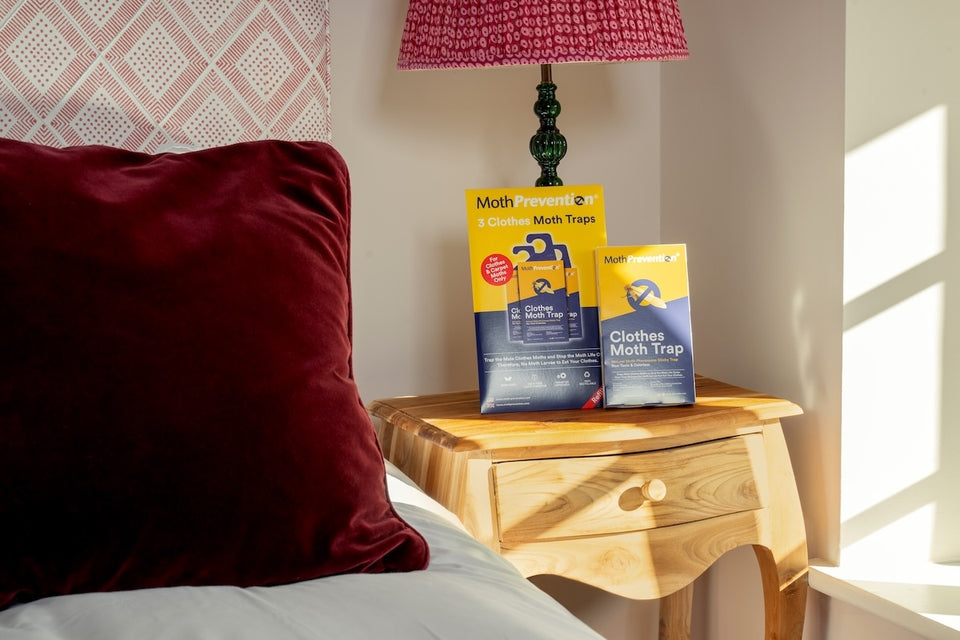
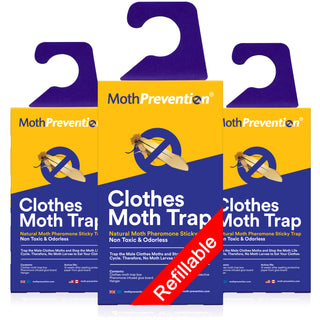
After deep cleaning, place premium pheromone clothes moth traps in the guest room and adjacent closets. High-quality traps utilize sticky adhesive boards infused with female sex pheromones specifically calibrated for Tineola bisselliella.
Pheromone traps perform two critical roles:
- Early Detection: If residual eggs hatch behind baseboards or inside floorboard gaps, emerging adult males are attracted to the board, alerting you before new damage develops on fabrics.
- Disrupting the Breeding Cycle: Catching adult male moths prevents them from finding and fertilizing females, stopping reproduction before a secondary infestation can start.
Place traps roughly three to six feet off the floor in quiet areas with mild air circulation. Keep them away from drafty exterior doors, windows, and direct furnace vents, as excessive forced heat can dry the glue and degrade the pheromones prematurely.
Trap Maintenance and Refill Schedule
Pheromone traps serve as a continuous monitoring network rather than a one-time treatment. Consistent management throughout the winter ensures sustained protection:
- Replace Sticky Strips Every 12 Weeks: Pheromone lures slowly lose potency over a three-month window. Installing fresh refills every 12 weeks keeps the scent trail active to draw out newly emerging males.
- Check Traps Every Two Weeks: Examine the sticky board twice a month to monitor catch counts. Zero catches confirm your sanitization worked; an abrupt increase reveals an active, localized harborage nearby.
- Escalate During Severe Outbreaks: If traps capture high numbers across multiple closets, supplement trapping with targeted room treatments, such as specialized natural sprays or fumers to address adult populations before Thanksgiving visitors unpack.

Frequently Asked Questions
Can clothes moths survive on pure cotton and linen sheets?
Clothes moth larvae depend on keratin, which is absent in plant fibers like pure cotton and flax linen. However, they will chew through cotton or linen if the fabric contains dried sweat, beverage spills, food stains, or natural body oils. Additionally, if cotton sheets sit in direct contact with wool blankets, larvae will chew right through the cotton to reach the wool or to gather casing material.
Why is a closet near a heating duct more vulnerable than an outer bedroom closet?
Closets near heating vents, boiler rooms, or furnace ducts maintain temperatures between 72°F and 80°F. While standard closets on exterior walls cool down in November, warm interior closets act as heated incubators. Constant warmth speeds up egg incubation and accelerates larval feeding, converting a slow seasonal cycle into rapid fabric destruction.
How can I protect guest bedding without using toxic mothballs?
A modern, non-toxic alternative to chemical mothballs relies on thorough vacuuming, thermal treatment (hot washing or sub-zero freezing), sealed zippered storage containers, and pheromone traps to capture male moths without fumes.
Does a standard warm wash cycle kill clothes moth eggs?
No. Standard eco-friendly or warm wash cycles running between 85°F and 105°F do not kill clothes moth eggs or larvae. While agitation can dislodge some insects, many survive mild water temperatures. Reliable thermal mortality requires water temperatures of at least 140°F (60°C) for 30 minutes, professional dry cleaning, or freezing at 0°F (-18°C) for at least 72 hours.
When should I set out moth traps before holiday visitors arrive?
Set out pheromone traps two to four weeks before guests arrive. Deploying traps in early November provides adequate lead time to detect active adult moths, sanitize affected linens, and clear guest spaces before friends and family unpack their suitcases for Thanksgiving and winter gatherings.
Keeping Your Home Ready for the Season
Discovering damaged blankets or flying moths while preparing for holiday guests is frustrating, but the problem can be resolved systematically. By recognizing how central heating turns dark closets into warm incubators, sanitizing vulnerable woolens with proper thermal treatments, and maintaining pheromone traps, you can protect your valuable heirlooms and welcome Thanksgiving guests into a clean, comfortable, moth-free home.
About MothPrevention
MothPrevention® speak to customers every day about their clothes moth issues - clothes moths are a species that are ever increasing and that can cause significant damage to clothes, carpets and other home textiles.
To date, we’ve helped over 250,000 customers deal with their moth problems. We have developed professional grade solutions including proprietary pheromones and trap design, not available from anybody else in the USA.


