Don’t Bring Moths Home: 5 Ways Clothes Moths Hitchhike from Hotels to Houses

Finding a hole in your favorite sweater after a relaxing vacation is more than just a laundry mishap; it is often the first sign of a serious infestation. While many travelers are hyper-vigilant about bed bugs when staying in hotels or rental properties, Clothes Moths are equally adept at hitching a ride in your suitcase. These quiet, destructive pests specialize in moving undetected, turning a luxury getaway into a long-term household infestation.
Understanding how these insects navigate the world of travel is the only way to ensure they do not become permanent residents in your home. By following a methodical approach to travel hygiene and garment care, you can protect your investment in natural fiber clothing.
Why Hotels and Rental Properties are At-Risk Zones
Clothes Moths, specifically the Common Clothes Moth (Tineola bisselliella), thrive in environments where natural fibers are left undisturbed. Hotels, even high-end boutiques, provide the perfect habitat. Heavy wool curtains, decorative silk pillows, and wall-to-wall carpeting in guest rooms offer ample keratin: the protein found in animal-based fibers that Clothes Moth Larvae require to grow.
Because hotel rooms see a rotating door of guests, a single traveler arriving from an infested home can inadvertently "seed" a hotel room. The moths then lay eggs in the dark recesses of closets or under the bed, waiting for the next guest’s cashmere scarf or wool suit to arrive.
5 Ways Clothes Moths Hitchhike into Your Luggage
1. The "Closet Transfer" Method
The most common way moths enter your life during travel is through the hotel closet. Many travelers immediately hang their wool coats, silk dresses, or cashmere sweaters upon arrival to avoid wrinkles. If the previous guest left behind microscopic eggs or larvae in the corners of the wardrobe, these pests will quickly migrate to your garments. Because the eggs are less than 1mm in size, they are virtually invisible to the naked eye.
2. Nesting in Dirty Laundry

Clothes Moth Larvae are not just attracted to the fiber itself; they are highly attracted to fibers that contain "nutritional extras" like sweat, skin oils and food spills. During a trip, your worn clothing accumulates these attractants. If you leave a pile of worn wool socks or silk shirts at the bottom of a dark closet or in an open suitcase, you are setting a trap for female moths looking for a nutrient-rich place to lay their eggs.
3. Exploiting Soft-Sided Luggage
Modern luggage often features fabric linings, mesh pockets and canvas exteriors. While convenient for organization, these textile elements can hold onto moth eggs or larvae. If a suitcase is stored under a hotel bed (a primary zone for dust where hair and lint accumulate) larvae can crawl from the carpet onto the exterior of the bag and eventually find their way through zippers or seams into the interior.
4. Second-Hand Souvenirs
Travelers often bring home more than just memories. Antique rugs, vintage wool blankets, or even artisanal felted items purchased at local markets are high-risk items. These souvenirs are often stored in environments without moth prevention protocols. Placing a vintage wool find directly into your suitcase alongside your existing wardrobe is one of the fastest ways to introduce a heavy infestation into your home.
5. Shared Transit and Cargo Holds
While less common than direct contact in a room, the sheer volume of textiles moving through airport cargo holds and bus luggage compartments creates an opportunity for cross-contamination. If a nearby bag is heavily infested, larvae can migrate between bags in search of a new food source.
The Biological Reality: It Isn't the Moths You See

It is a common misconception that the fluttering adult moth is the one eating your clothes. In reality, adult Clothes Moths do not even have active mouthparts; they do not eat. Their sole purpose is to find a mate and a suitable food source for their offspring.
The damage is caused exclusively by the Clothes Moth Larvae. These small, cream-colored caterpillars spend their life cycle eating keratin. If you bring home a single mated female or a few eggs on a sweater, the larvae can hatch within 4 to 10 days and begin feeding immediately. By the time you notice the damage, the infestation is already well underway.
How to Prevent a Travel-Related Infestation
To stop moths from hitchhiking, you must implement a strict post-travel protocol. Consistency is the key to protecting your wardrobe.
Inspect and Isolate
Before you even bring your suitcase into your bedroom, perform an inspection. If possible, unpack in a garage or a room with hard flooring (such as a laundry room) rather than on a carpeted surface. Check the seams of your suitcase and the folds of your natural fiber items for any signs of silk-like webbing or "rice-grain" cases.
The Power of Temperature
As mentioned previously, Clothes Moths are highly sensitive to temperature.
- Heat: Wash all washable items on a high-heat cycle (at least 120°F or 49°C) upon returning home.
- Freezing: For delicate cashmere or silk that cannot withstand high heat, place the items in a sealed plastic bag and put them in the freezer. To be effective, the temperature must be 0°F (-18°C) or lower, and the items must remain frozen for at least 72 hours.
- Dry Cleaning: This remains the most effective way to eliminate all life stages of the moth from delicate garments.

Clean Your Luggage
Do not simply put your suitcase back under the bed or in the attic. Vacuum the interior and exterior of your luggage thoroughly, paying close attention to the zippers and mesh compartments. If your suitcase has a removable liner, wash it. If not, consider using a fabric-safe steam cleaner to kill any potential eggs.
Monitoring Your Home After Travel
Even with careful inspection, it is possible for a few eggs to slip through. This is where Clothes Moth Traps become an essential tool for the modern traveler.
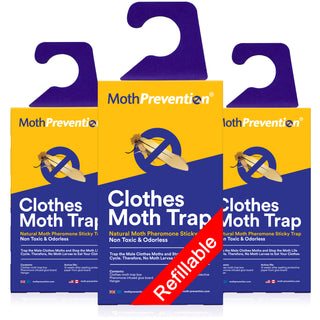
These traps use specialized pheromones to attract the adult male moths. By placing traps in your closets or dressing areas upon your return, you create an early warning system. If you see a moth caught in the trap within the first 12 weeks after a trip, you know that a hitchhiker successfully made it into your home. This allows you to take immediate action before the larvae can cause significant damage.

Managing Traps and Refills
A common mistake is setting a trap and forgetting it. To maintain a moth-free zone, you must replace the pheromone boards every 12 weeks. Using Clothes Moth Trap Refills ensures that the pheromone scent remains at a concentration high enough to lure the moths. These traps are non-toxic and pesticide-free, making them safe for use in residential bedrooms and closets.

When to Seek Professional-Grade Solutions
If you return from a trip and discover that moths have already spread to multiple areas of your closet, your response needs to escalate.
- Light Catch: 1 to 5 moths in a trap. Increase cleaning, vacuuming, and monitoring.
- Moderate Catch: More than 5 moths or visible holes in clothing. Deep clean all wardrobes and consider a full "inventory freeze" of natural fibers.
- Heavy Infestation: Widespread sightings and significant damage. In these scenarios, a Clothes Moth Killer Kit is often necessary. These kits provide a multi-pronged approach, combining traps with targeted sprays or foggers designed to reach larvae in cracks and crevices that vacuuming alone might miss.
Frequently Asked Questions
Can clothes moths live in suitcases for long periods?
Yes, clothes moth larvae and eggs can survive inside a dark, stored suitcase for several weeks or even months. If your suitcase contains natural fiber residues, dust, lint, or human hair, larvae can successfully feed and mature inside the bag while it sits in your closet or attic. This is why vacuuming or steaming your luggage after every trip is a non-negotiable step.
Do hardshell suitcases protect against clothes moths better than soft fabric bags?
Hardshell suitcases do offer a superior layer of protection because they lack the external fabric weave where eggs and larvae can cling. However, they are not completely impervious. Moths can still enter through zipper teeth, fabric expansion joints, or seams. Regardless of suitcase material, the interior should be cleaned after traveling.
What should I do immediately if I spot a live moth in my hotel room closet?
If you spot an active moth, do not hang any of your garments in the closet or place them on fabric surfaces like couches or carpets. Keep all of your belongings zipped inside your suitcase, and keep the suitcase elevated on a luggage rack away from walls and curtains. When you return home, treat every item in that suitcase as if it has been exposed.
Does standard hotel dry cleaning kill clothes moths?
Yes, professional dry cleaning processes used by hotels are highly effective at killing all stages of clothes moths, including eggs and larvae. The chemical solvents combined with high heating cycles completely eradicate the pests. If you suspect exposure while traveling, having your natural fibers dry-cleaned before packing them for the journey home is an excellent preventative step.
Can clothes moths hitchhike on cotton, polyester, or synthetic clothing?
While clothes moth larvae cannot digest synthetic fibers or plant-based materials like cotton, they can still hitchhike on them. Adult moths may lay eggs on cotton or synthetic garments if those garments are soiled with sweat, food oils, or hair. Additionally, larvae can use these fabrics as temporary resting places or chew through them to reach adjacent wool or cashmere items.
Your wardrobe represents a significant emotional and financial investment. Whether it is a bespoke wool suit or a vintage silk scarf, these items deserve protection. Travel is a necessary part of modern life, but it should not come with the hidden cost of a moth infestation. By understanding how these pests hitchhike and maintaining a strict post-travel cleaning routine, you can ensure that the only things you bring home from your next trip are memories and souvenirs: not a closet full of holes.

About MothPrevention
MothPrevention® speak to customers every day about their clothes moth issues - clothes moths are a species that are ever increasing and that can cause significant damage to clothes, carpets and other home textiles.
To date, we’ve helped over 250,000 customers deal with their moth problems. We have developed professional grade solutions including proprietary pheromones and trap design, not available from anybody else in the USA.